


How Smart HVAC Technology Is Changing Modern Home Comfort
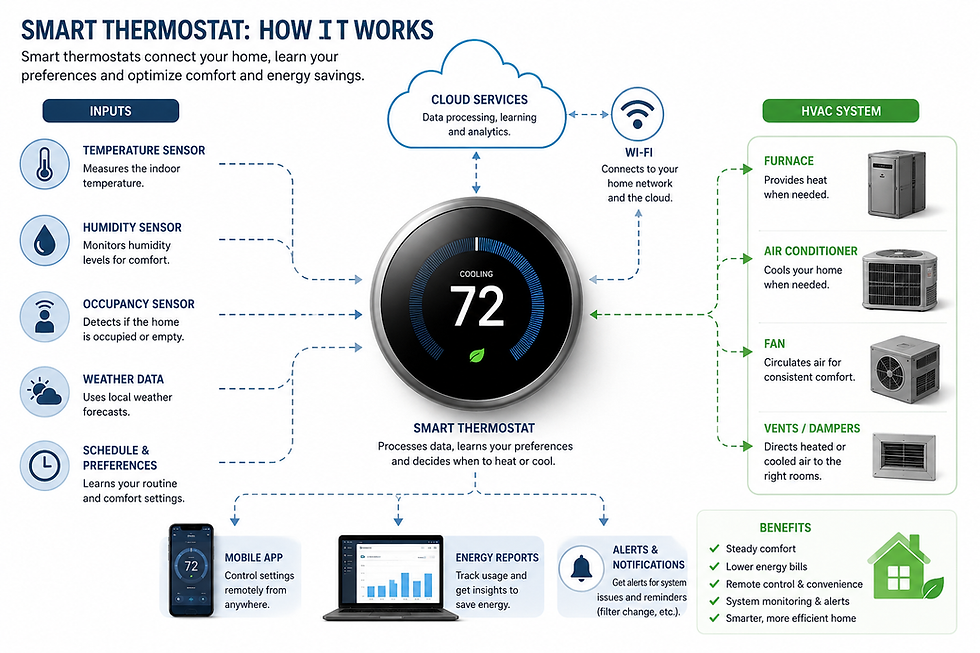
The way we heat, cool, and manage indoor spaces is changing rapidly. Smart HVAC technology is making modern air-conditioning systems more intelligent, efficient, and responsive to the needs of homeowners.
Instead of simply turning an AC system on or off, smart HVAC solutions can monitor conditions, learn usage patterns, detect problems, and automatically adjust performance
1. Smarter Temperature Control:
Smart thermostats and connected AC systems can monitor indoor temperature and adjust cooling automatically. Some systems can also use occupancy information to avoid cooling rooms that aren't being used.
This means homeowners can maintain a more comfortable environment without constantly adjusting the temperature manually
2. Control From Anywhere:
With connected HVAC systems, homeowners can use a smartphone app to:
Turn the AC on or off remotely.
Adjust temperature.
Set schedules.
Monitor energy consumption.
Receive system notifications.
For example, you could switch on your AC before arriving home so the room is comfortable when you get there.
3. Better Energy Efficiency
One of the biggest advantages of smart HVAC technology is energy management.
Smart systems can optimize cooling based on factors such as:
Room temperature
Occupancy
Time of day
User preferences
Outdoor conditions
Rather than running continuously at maximum capacity, the system can adjust its operation according to actual demand.
4. Predictive Maintenance:
Modern HVAC equipment is increasingly capable of identifying unusual operating conditions.
Sensors and monitoring systems can help identify issues such as:
Abnormal temperature changes
Poor airflow
Filter-related problems
Unusual equipment performance
Increased energy consumption
This can allow technicians to investigate problems before a small issue develops into a major breakdown.
5. Integration With Smart Homes
Smart HVAC systems can work alongside other connected home devices.
For example, an HVAC system could interact with:
Smart thermostat occupancy sensors, home automation - HVAC system.
This creates a more coordinated approach to indoor comfort.
6. A More Sustainable Future
As energy efficiency becomes increasingly important, smart controls can help reduce unnecessary HVAC operation and improve overall system performance.
However, smart technology does not replace proper installation and maintenance. Even the most advanced AC system will perform poorly if it is incorrectly sized, poorly installed, dirty, or inadequately maintained.
What This Means for Homes in Ghana
For Ghanaian homeowners and businesses, smart HVAC technology presents an opportunity to combine comfort, convenience, and better energy management.
The future of air conditioning isn't simply about making rooms colder.
It's about creating systems that understand when cooling is needed, how much cooling is needed, and how to deliver it efficiently.
What’s Actually Different Under the Hood
The technology behind modern smart HVAC systems combines sensors, intelligent software, and wireless connectivity to create a more responsive approach to indoor comfort. Instead of treating the entire home as one space, these systems can monitor and adjust conditions in different rooms based on temperature, occupancy, and usage patterns.
Over time, some smart systems can learn household routines. For example, they may recognize that the home is usually empty during working hours or that a particular bedroom tends to stay warmer than other areas. The system can then use this information to make more informed adjustments.
Geofencing: Comfort That Knows When You’re Coming Home
One of the most useful features is geofencing. When your connected smartphone leaves a defined area around your home, the HVAC system can adjust its operation to reduce unnecessary energy use. When you return, the system can begin preparing the home for your arrival.
The Comfort and Cost Trade-Off That Often Gets Overlooked

Many homeowners associate smart HVAC technology primarily with lower energy bills. While improved efficiency can certainly lead to savings, one of the biggest advantages is often the consistency of indoor comfort.
Traditional thermostats typically allow the temperature to rise or fall by several degrees before activating the HVAC system again. This can create noticeable temperature swings—where a room feels warm, becomes overly cool for a short period, and then warms up again.
Smart HVAC systems can reduce these fluctuations by making smaller and more precise adjustments. Instead of waiting for significant temperature changes, the system responds more intelligently to maintain a steadier indoor environment.
Better Comfort Where It Matters Most
This consistent temperature can be particularly valuable in bedrooms, where even a small change in temperature during the night can affect sleep comfort.
Home offices can also benefit, especially when a particular room has poor airflow or tends to become warmer than the rest of the house. With zoned HVAC systems, homeowners can target that specific area without unnecessarily cooling the entire home.
The Investment Beyond Energy Savings
However, smart HVAC technology isn't an instant solution for every home. Installation costs can be higher than simply replacing a traditional thermostat, and the benefits are maximized when the home itself is properly prepared.
Good insulation, properly sealed windows, and well-maintained ductwork all play an important role in HVAC performance. A smart thermostat cannot compensate for major heat loss, air leakage, or poorly designed ductwork.
Before investing in a smart HVAC upgrade, homeowners should consider having a qualified HVAC professional inspect the ductwork, insulation, airflow, and overall system performance.

Where Smart HVAC Technology Is Headed Next
The next generation of HVAC technology is moving beyond simply responding to temperature changes toward anticipating them.
Instead of waiting for a room to become uncomfortable before making an adjustment, newer systems can use factors such as weather forecasts, historical usage patterns, and indoor conditions to prepare for changes in advance. For example, a system may begin making small adjustments before a particularly hot afternoon rather than waiting until the indoor temperature rises significantly.
Beyond Temperature Control
Smart HVAC systems are also becoming more focused on overall indoor air quality. Some modern systems incorporate sensors that monitor factors such as humidity and air quality alongside temperature.
This is important because true indoor comfort isn't determined by temperature alone. Humidity, ventilation, and air quality can all influence how comfortable and healthy an indoor environment feels.
Start With the Home, Not Just the Technology
For homeowners considering an upgrade, one of the smartest first steps is a professional home energy assessment.
An assessment can help identify areas where conditioned air is being lost, including inadequate insulation, air leaks, or inefficient ductwork. This makes it easier to determine whether a smart HVAC system will address the main problem or whether improvements to the home should come first.


Comments